
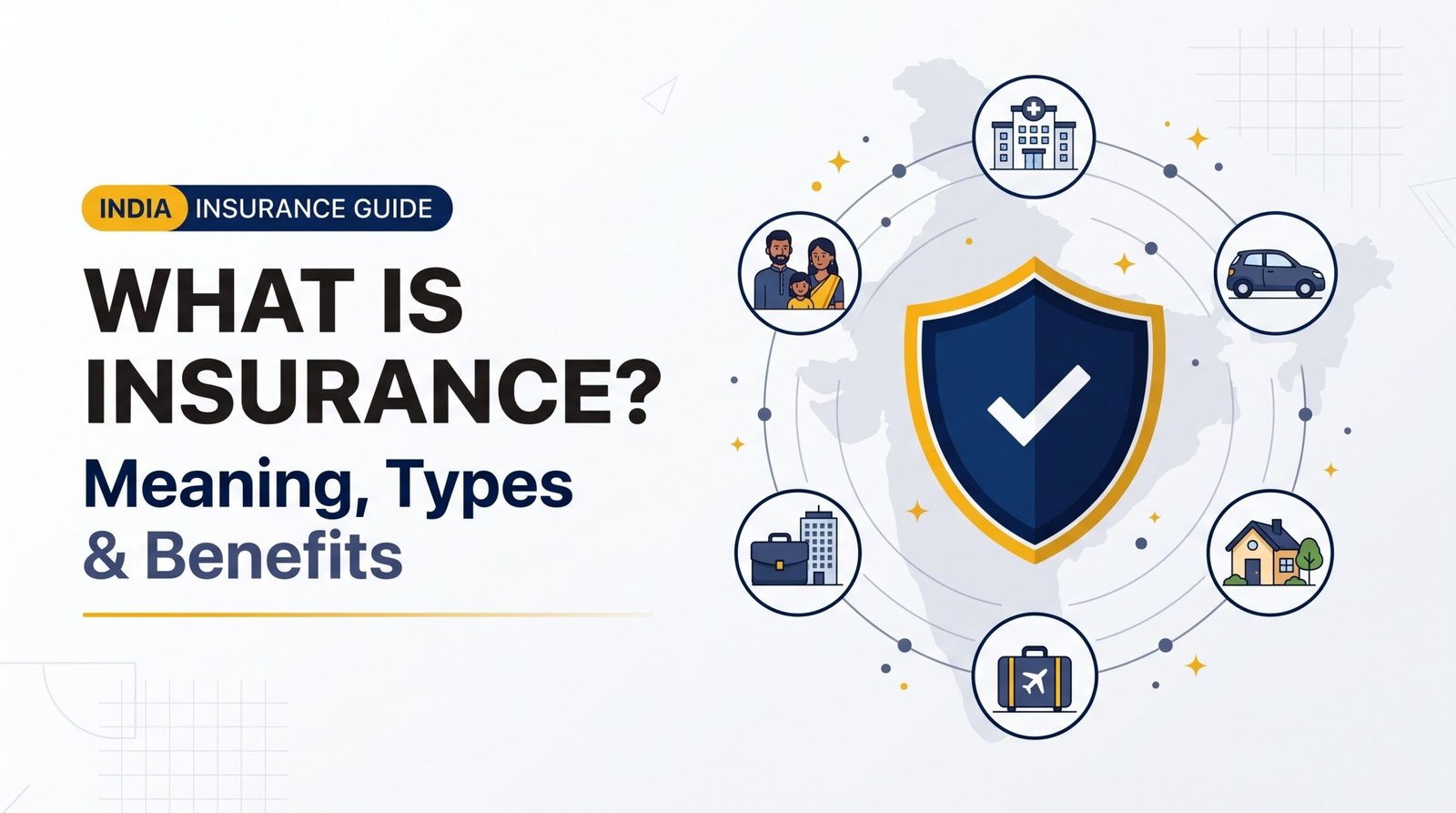
Insurance is an important part of financial planning in India. It provides financial protection against unexpected events such as accidents, illnesses, death, theft, natural disasters, and damage to property. In simple terms, insurance is a financial agreement in which you pay a certain amount of money, called a premium, to an insurance company in exchange for protection against specified risks.
For example, a family may purchase health insurance to protect itself against high hospital expenses. A person with a car may purchase motor insurance to protect against certain losses arising from accidents, theft, or third-party liability. Similarly, a person with financial dependents may purchase life insurance to provide financial support to their family in the event of their death.
In a country like India, where medical costs, vehicle expenses, property values, and other financial responsibilities can increase significantly over time, insurance can play an important role in protecting savings and maintaining financial stability.
What Is Insurance?
Insurance is a contract between an insurance company and a policyholder. Under this contract, the policyholder agrees to pay a premium, while the insurance company agrees to provide financial protection for specific risks covered under the policy.
The agreement is documented in an insurance policy, which explains what is covered, what is excluded, how much protection is available, the premium payable, deductibles or other cost-sharing provisions where applicable, and the conditions that must be followed.
For example, suppose a person purchases a health insurance policy with a sum insured of ₹10 lakh. If that person is hospitalized for a covered medical condition, the insurer may pay eligible medical expenses according to the terms and limits of the policy.
Similarly, suppose someone purchases life insurance and later dies during the policy period. Depending on the type of policy and its terms, the insurer may pay the applicable death benefit to the nominee.
The important point is that insurance does not guarantee payment for every type of loss. The insurer generally pays only when the event is covered by the policy and the claim satisfies the policy conditions.
How Does Insurance Work in India?
The basic principle of insurance is risk sharing.
Millions of people in India face different financial risks. However, only a portion of them will experience a major covered loss during a particular period. Insurance companies collect premiums from many policyholders and use the pooled funds to pay eligible claims, while also managing expenses, reserves, and other financial requirements.
For example, imagine that thousands of people purchase health insurance. Every policyholder pays a premium, but not everyone will require expensive hospitalization in the same year. When some policyholders experience covered medical expenses, the insurer can use its pooled resources to settle eligible claims.
Insurance companies use risk assessment, actuarial calculations, underwriting, historical data, and other factors to determine premiums and policy conditions.
In India, the Insurance Regulatory and Development Authority of India (IRDAI) regulates and supervises the insurance sector. Its role includes protecting policyholders’ interests and supporting the orderly development of the insurance industry.
Important Insurance Terms in India
Before buying an insurance policy, it is important to understand some common terms.
Premium
A premium is the amount you pay to an insurance company to maintain your insurance coverage. Depending on the policy, you may pay the premium monthly, quarterly, half-yearly, or annually.
For example, if your health insurance premium is ₹15,000 per year, you generally need to pay the applicable premium to keep the policy active, subject to the policy’s terms.
Policy
An insurance policy is the legal contract between you and the insurance company. It contains the details of your coverage, benefits, exclusions, limits, conditions, and other important information.
Policyholder
The policyholder is the person or entity that owns the insurance policy and is responsible for the policy according to its terms.
Sum Insured
In many general and health insurance policies, the sum insured refers to the maximum amount of coverage available for specified covered losses, subject to the policy terms.
For example, a health insurance policy may have a sum insured of ₹5 lakh, ₹10 lakh, ₹20 lakh, or more.
Deductible
A deductible is an amount that the policyholder may have to bear before the insurer pays the eligible portion of a covered claim, depending on the policy.
A higher deductible can sometimes reduce the premium, but it also means that you may have to pay more yourself when making an eligible claim.
Claim
A claim is a formal request made to an insurance company for payment or benefits following a covered event.
For example, if you are hospitalized for a covered condition, you may submit a health insurance claim to the insurer or the relevant claims administrator.
Nominee
A nominee is a person designated to receive the applicable policy benefit in circumstances specified by the policy, particularly in life insurance.
Choosing and updating the nominee is an important part of maintaining your financial records.
Coverage Limit
A coverage limit is the maximum amount the insurer will pay for a particular type of covered loss or benefit, according to the policy.
Exclusions
Exclusions are situations, expenses, events, or conditions that the insurance policy does not cover. Reading exclusions carefully is essential before purchasing insurance.
Major Types of Insurance in India
Insurance products in India can broadly be divided into life insurance and general or health insurance, although the market includes many specific products and categories.
1. Health Insurance
Health insurance provides financial protection against eligible medical and hospitalization expenses, according to the policy terms.
Medical treatment can become expensive, particularly for major surgeries, prolonged hospitalization, cancer treatment, critical illnesses, or treatment at private hospitals. A suitable health insurance policy can help protect your savings from significant healthcare expenses.
For example, if a family has health insurance with adequate coverage, a covered hospitalization may be paid for according to the policy instead of the family having to bear the entire eligible expense from its savings.
When comparing health insurance in India, consider factors such as the sum insured, room-rent restrictions, waiting periods, exclusions, co-payments, network hospitals, restoration benefits, claim procedures, and policy conditions.
2. Life Insurance
Life insurance is designed primarily to provide financial protection to a person’s dependents after their death, subject to the policy terms.
For example, if a family depends heavily on one person’s income, the sudden death of that person could create serious financial difficulties. A suitable life insurance policy can provide a death benefit to the eligible beneficiary or nominee according to the policy.
Term insurance is a common form of life insurance that generally provides life cover for a specified period and typically focuses on protection rather than investment or savings.
The appropriate amount of life insurance depends on factors such as income, debts, family responsibilities, children’s education, future financial goals, and existing assets.
3. Motor Insurance
Motor insurance is particularly important for vehicle owners in India.
Under Indian law, third-party liability insurance is mandatory for motor vehicles. Depending on the policy, motor insurance may also provide protection against damage to your own vehicle and other specified risks.
Common types of motor insurance arrangements include third-party cover and comprehensive policies, although the exact coverage depends on the product and policy terms.
For example, if your car is involved in an accident, a comprehensive policy may provide protection for certain own-damage losses in addition to third-party liability, subject to applicable conditions.
4. Home Insurance
A home is one of the largest assets many Indian families own. Home insurance can provide protection against specified risks affecting the building and/or household contents, depending on the policy.
Covered risks may include events such as fire, certain natural disasters, theft, or other specified causes.
Homeowners should carefully check what their policy covers because not every type of damage or natural event is automatically included.
5. Personal Accident Insurance
Personal accident insurance can provide specified benefits in the event of accidental death or certain accidental injuries, depending on the policy.
This type of insurance can be useful because an accident may result not only in medical expenses but also in temporary or permanent loss of income.
6. Travel Insurance
Indians travelling within India or abroad may consider travel insurance for protection against certain unexpected travel-related events.
Depending on the policy, coverage may include eligible medical emergencies, trip cancellation or interruption, baggage-related losses, travel delays, and other specified situations.
Travel insurance is particularly worth considering for international travel because medical treatment abroad can be extremely expensive.
7. Business Insurance
Businesses in India face risks such as property damage, employee-related risks, liability claims, equipment breakdown, cyber risks, and interruptions to operations.
Different forms of business insurance can help protect companies against specified risks. The appropriate coverage depends on the nature, size, location, and activities of the business.
Why Is Insurance Important in India?
The biggest advantage of insurance is financial protection against unexpected losses.
Consider a middle-class Indian family that has spent years building its savings. A major medical emergency costing several lakh rupees could consume a significant portion of those savings. Similarly, the death of the family’s primary earner could create long-term financial difficulties.
Insurance can help reduce these risks.
It can protect your savings, support your family’s financial security, protect valuable assets, and help you manage liabilities. It can also provide greater financial confidence because you know that certain risks have been financially planned for.
However, insurance should not replace an emergency fund or sensible financial planning. Instead, insurance and savings work together: savings help you handle planned and smaller unexpected expenses, while insurance helps protect against potentially large financial losses.
How to Choose the Right Insurance Policy in India
Choosing insurance should not be based only on the lowest premium. A cheap policy may not provide sufficient protection, while paying for unnecessary coverage can waste money.
Start by identifying your major financial risks.
If you have a family that depends on your income, consider adequate life insurance. If you do not have sufficient employer-sponsored medical coverage, consider personal health insurance. If you own a vehicle, make sure you have the legally required motor insurance and understand whether additional coverage is appropriate.
Before purchasing a policy, compare:
Premium and payment frequency
Coverage and sum insured
Deductibles and co-payments
Waiting periods
Exclusions
Coverage limits
Claim process
Network hospitals, where applicable
Policy renewal conditions
Insurer’s service and claims information
Terms and conditions of the policy
Most importantly, read the policy documents carefully before buying. Do not make a decision solely based on an advertisement or verbal promise.
It is also a good idea to review your insurance every few years. Your financial responsibilities may change after marriage, having children, purchasing a house, changing jobs, starting a business, or taking a large loan.
Insurance and Financial Planning
Insurance is an important foundation of a sound financial plan.
A person may invest money in mutual funds, fixed deposits, stocks, real estate, or other assets to build wealth. But wealth creation alone is not enough. A major illness, accident, disability, or death can disrupt years of financial progress.
Insurance helps protect the financial plan from such risks.
For example, imagine someone has built investments worth ₹25 lakh but has no adequate health insurance. A serious medical event could consume a substantial portion of those investments. With appropriate health coverage, the person’s investments may be better protected from eligible medical expenses, subject to policy terms.
This is why financial planning should generally consider both wealth creation and risk protection.
Final Thoughts: What Does Insurance Really Mean?
So, what is insurance?
Insurance is a financial risk-management tool that provides protection against specified unexpected losses. You pay a premium to an insurance company, and in return, the insurer provides financial benefits or compensation when a covered event occurs, subject to the policy’s terms and conditions.
In India, insurance can protect different aspects of your financial life—from your health and income to your family, vehicle, home, and business.
The right insurance policy is not necessarily the one with the cheapest premium or the largest advertised benefit. It is the policy that provides appropriate protection for your actual financial risks at a cost you can reasonably afford.
Insurance cannot stop an accident, illness, death, theft, or natural disaster from happening. What it can do is make the financial consequences easier to manage.
That is the real value of insurance: you cannot always control what happens in life, but you can prepare financially for the risks you may face.